
Sustainability · 2025
In this section49 topics
- Sustainability Policy3 items
- Sustainability Goals & UN SDGs3 items
- Policy Review2 items
- Business Value Chain1 item
- Stakeholder Analysis1 item
- Environmental Policy & Guidelines3 items
- Environmental Policy Review3 items
- Energy — Plan & Guidelines2 items
- Energy — Electricity Consumption1 item
- Energy — Fuel Consumption1 item
- Energy — Targets2 items
- Energy — Performance & Outcomes2 items
- Water — Plan & Guidelines2 items
- Water — Withdrawal, Discharge & Consumption1 item
- Water — Targets2 items
- Water — Performance & Outcomes2 items
- Waste — Plan & Guidelines2 items
- Waste — Generation, Disposal & Recycling1 item
- Waste — Targets2 items
- Waste — Performance & Outcomes2 items
- GHG — Plan & Guidelines2 items
- GHG — Emissions1 item
- GHG — Emissions Verification2 items
- GHG — Principles & Standards1 item
- GHG — Targets1 item
- GHG Targets — Net Zero1 item
- GHG — Performance & Outcomes2 items
- Environmental Legal Incidents1 item
- Other Environmental Management1 item
- Social Policy & Guidelines3 items
- Social Policy Review1 item
- Human Rights Due Diligence1 item
- Employees — Plan & Guidelines3 items
- Employees — Workforce1 item
- Employees — Remuneration & Provident Fund1 item
- Employees — Training & Development1 item
- Employees — Occupational Health & Safety1 item
- Employees — Labour Relations1 item
- Employees — Employee Representation2 items
- Employees — Targets2 items
- Employees — Performance & Outcomes2 items
- Customers — Plan & Guidelines3 items
- Customers — Satisfaction Results1 item
- Customers — Targets2 items
- Customers — Performance & Outcomes2 items
- Community & Social — Plan & Guidelines3 items
- Community & Social — Targets2 items
- Community & Social — Performance & Outcomes2 items
- Law Violation Incidents1 item
Sustainability Policy
Has a Sustainability Policy
Yes
Policy Description
Corporate Sustainability Management Policy
To realize a prosperous society in which a "sustainable global environment" and a "safe, stable, and comfortable society" are compatible”, as declared in one of the Company's management policies. The Company recognizes the importance of sustainable development to help the organization grow steadily as a guideline for the organization’s operations to cover and balance in 3 dimensions: economy, society, and environment. Under the principles of good corporate governance throughout the business value chain and considering the impact on stakeholders, society and the environment, the Company announced the policy to drive the organization and conduct business under the management framework to be in the same direction.
The Company's Value Chain
Raw Material and Component Procurement : The Company places great importance on selecting suppliers that operate in accordance with ethical business practices. Supplier assessments are conducted covering environmental and social standards. The Company also emphasizes Green Procurement in accordance with Mitsubishi Electric Group standards by sourcing environmentally friendly components and materials to reduce the use of hazardous substances in its products.
Manufacturing and Innovation : The Company focuses on energy-efficient manufacturing processes and reducing greenhouse gas emissions. Smart Factory technologies and automation systems are utilized to minimize production losses and improve operational efficiency. In addition, the Company continuously develops innovative energy-saving products that have received the highest 5-star rating under Thailand’s No. 5 Energy Label program. Products are also designed with Product Longevity in mind to extend service life and reduce electronic waste (E-Waste), thereby minimizing long-term environmental impacts.
Logistics and Distribution : The Company strives to enhance warehouse management and product distribution efficiency for both domestic and international markets. Transportation routes are optimized to reduce fuel consumption, while packaging materials are selected based on their reusability and recyclability to minimize waste generated throughout the logistics process.
Marketing and Sales : Marketing activities are conducted through Mitsubishi Electric's authorized distribution network with a strong commitment to transparency and business ethics. The Company provides accurate and reliable product information, particularly regarding energy-saving features, environmental benefits, and product durability, enabling consumers to make informed purchasing decisions that offer long-term value and environmental responsibility.
Customer Service and Relationship Management : The Company maintains a comprehensive service center and maintenance network to provide nationwide customer support. Customer feedback and suggestions are continuously collected and analyzed to support product improvements and ensure that products continue to meet evolving consumer needs in the digital era.
Scope of the report
The Company has an objective of operating its business with social and environmental responsibility under the philosophy of business operation as “Innovating For a Better Tomorrow.” It is committed to developing personal capabilities, innovating products of value, supporting customers’ wealth and growth, fostering quality of the society, and bringing sustainable returns to the shareholders so that the organization can stay happy with the community and the public, and concurrently bring ongoing prosperity to all stakeholders for the Sustainable Development. This report presents the results of the Company’s sustainable business operations with a period from April 1, 2025 to March 31, 2026.
Policy Document Link
https://www.mitsubishi-kye.com/th/sustainability
Sustainability Goals & UN SDGs
Has Sustainability Goals
Yes
Goals Description
Sustainability management goals
The Company, as a manufacturer and distributor of electrical appliances under the trademark “Mitsubishi Electric”, is committed to conducting business under the concept of sustainable development that is applied to cover its operations throughout the organization as follows.
1. People
2. Planet
3. Prosperity
4. Peace
5. Partnership
UN Sustainable Development Goals
| SDG Goal |
|---|
| Goal 1 No Poverty |
| Goal 1 No Poverty |
| Goal 2 Zero Hunger |
| Goal 2 Zero Hunger |
| Goal 3 Good Health and Well-being |
| Goal 3 Good Health and Well-being |
| Goal 4 Quality Education |
| Goal 4 Quality Education |
| Goal 5 Gender Equality |
| Goal 5 Gender Equality |
| Goal 6 Clean Water and Sanitation |
| Goal 6 Clean Water and Sanitation |
| Goal 7 Affordable and Clean Energy |
| Goal 7 Affordable and Clean Energy |
| Goal 8 Decent Work and Economic Growth |
| Goal 8 Decent Work and Economic Growth |
| Goal 9 Industry, Innovation and Infrastructure |
| Goal 9 Industry, Innovation and Infrastructure |
| Goal 10 Reduce Inequalities |
| Goal 10 Reduce Inequalities |
| Goal 11 Sustainable Cities and Communities |
| Goal 11 Sustainable Cities and Communities |
| Goal 12 Responsible Consumption and Production |
| Goal 12 Responsible Consumption and Production |
| Goal 13 Climate Action |
| Goal 13 Climate Action |
| Goal 14 Life below Water |
| Goal 14 Life below Water |
| Goal 15 Life on Land |
| Goal 15 Life on Land |
| Goal 16 Peace, Justice and Strong Institutions |
| Goal 16 Peace, Justice and Strong Institutions |
| Goal 17 Partnerships for the Goals |
| Goal 17 Partnerships for the Goals |
Policy Review
Policy Reviewed This Year
Yes
Policy Changed This Year
No
Business Value Chain
Value Chain Description
Management of impacts on stakeholders in the business value chain
Business Value Chain
Operation with stakeholders is a matter of great importance for the company. The company takes into account the groups of stakeholders as well as manages the sustainability of activities throughout the business value chain from upstream, namely the procurement of raw materials and transportation in the production process until downstream business activities such as product development procurement, product transportation and distribution of products and services to respond to the needs and expectations of all stakeholder groups and create a balance between value from operations. Businesses for all stakeholders can build good relationships and confidence in operations between the companies and stakeholders. It adheres to the principles of the circular economy throughout the value chain and product life cycle to promote the maximum use of resources and increase recycling and reuse, reduce waste, and reduce greenhouse gas emissions, ready to meet the needs of customers who care about the environment.
Stakeholder Connecting
In assessing the stakeholders, the Company’s work units in charge of dealing and coordinating with each stakeholder groups through the joint meetings and email: information@kye.meap.com. The Company has brought complaints, suggestions, and opinions as a guideline for improving operations and responding to the expectations of all stakeholders appropriately. According to the Company's business ethics, Article 7, "Relationships with Stakeholders", conducting business and coordinating relationships based on honesty and fairness promotes good cooperation that would bring about sustainable development and growth.
Sustainability issues from different 6 groups of stakeholders
1. Employees
2. Customers
3. Business partners
4. Shareholders
5. Community
6. Government agencies
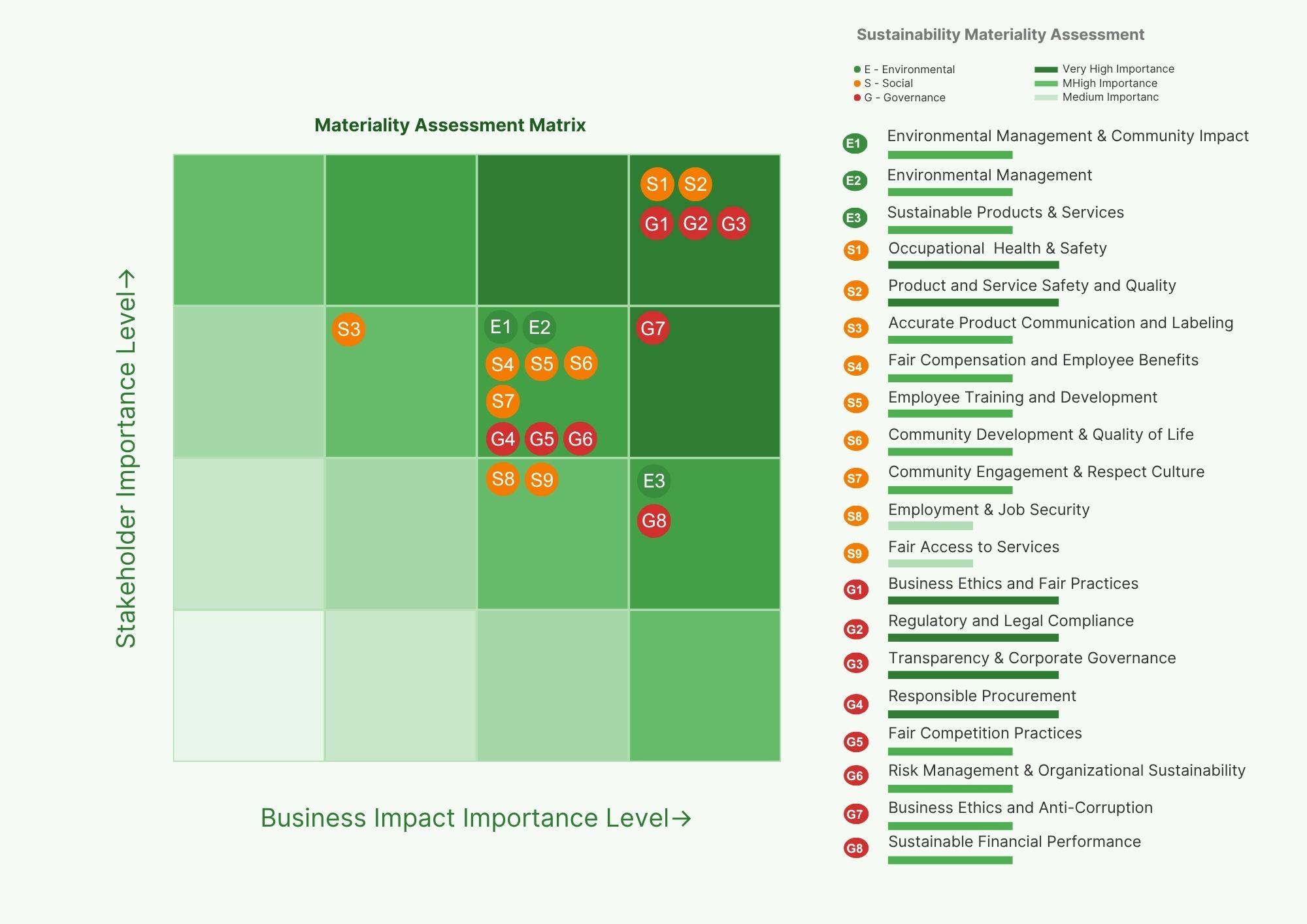
Determination of Material Sustainability Topics and Report Content
1. Identification
The Company identifies and compiles sustainability topics that are relevant to its business operations and throughout its value chain. The assessment takes into consideration internal factors, including the Company's strategic direction, as well as external factors such as global trends in the electrical appliance industry, emerging regulatory requirements, and the United Nations Sustainable Development Goals (SDGs). In addition, the Company considers the expectations and concerns of all stakeholder groups to identify actual and potential impacts arising from its business activities on the economy, environment, and people.
2. Prioritization
The Company evaluates and prioritizes the identified sustainability topics based on the principle of the Significance of Impacts. The assessment considers two key dimensions:
Dimension 1: Significance of Impacts
The Company assesses the actual and potential impacts of its business activities on the economy, environment, and people, including human rights. The assessment takes into account both the severity and likelihood of such impacts.
Dimension 2: Influence on Stakeholder Assessments and Decisions
The Company evaluates the level of stakeholder interest and expectations regarding each sustainability topic, as these factors may influence stakeholder assessments, decision-making processes, and confidence in the Company.
3. Validation
The prioritized sustainability topics are consolidated into a Materiality Matrix to determine the reporting boundaries and the appropriate scope of qualitative and quantitative disclosures. The results are subsequently disclosed in the Company's Annual Registration Statement / Annual Report (Form 56-1 One Report).
4. Review and Continuous Improvement
The Company provides channels for stakeholder engagement and feedback collection. Information obtained through these channels is used to review and improve the materiality assessment process for the following reporting period. This enables the Company to ensure that its material sustainability topics remain relevant, up-to-date, and responsive to evolving global trends and stakeholder expectations.
Results of the Material Sustainability Assess
Stakeholder Analysis
Stakeholder Analysis
| Stakeholder Type | Stakeholders | Stakeholder Expectations | Response to Expectations | Communication Activities |
|---|---|---|---|---|
| Internal stakeholders | 2921 · Description: Employees | • Provide fair compensation and appropriate welfare in line with the economic situation.
• Ensure job security and opportunities for career advancement.
• Ensure workplace safety and employee well-being.
• Provide continuous development of employees’ knowledge and skills.
• Practice social distancing and utilize protective equipment, such as face masks and hand sanitizer.
• A safe working environment that promotes quality of life and eco-friendliness. | • Promote fundamental labor rights in accordance with established workplace regulations.
• Determine compensation and other benefits in comparison with industry standards.
• Provide a safe, hygienic, and conducive working environment. | 2945 · Description: Complaint Reception · 2946 · Description: Employee Engagement Survey · 2947 · Description: Satisfaction Survey |
| External stakeholders | 2923 · Description: Customers | • Punctual delivery of safe and quality products in the required quantity
• Offering of products at reasonable prices
• Other services supportive to economic, social and environmental issues
• Trade agreements under fair conditions
• Accurate information on products and services
• Keeping customers’ information confidential
• Manufacturing employees must remain free from communicable diseases. | • Research, development and production of safe and energy-saving products
• Quality policy
• Training on technical knowledge and provision of knowledge on products to dealers
• Trade agreement rules and criteria
• Practice social distancing and use protective gear, including face masks and hand sanitizer. | 2943 · Description: External Meeting · 2945 · Description: Complaint Reception |
| External stakeholders | 2899 · Description: Suppliers | • Treat all business partners with equality and fairness in procurement practices.
• Offer fair returns and business agreements.
• Strictly adhere to all agreed-upon contracts and conditions.
• Ensure manufacturing employees remain free from infectious diseases.
• Minimize the impact of floods or earthquakes on production operations. | • Keeping abreast of procurement rules, regulations and criteria, such as those regarding selection of procurement sources
• Rules and regulations regarding inspection and follow-up of procurement sources
• Compliance with fair trade conditions
• Practice social distancing and utilize protective equipment, including face masks and hand sanitizer.
• Continuously monitor the impact of natural disasters (floods or earthquakes) to ensure rapid response and mitigation. | 2943 · Description: External Meeting · 2945 · Description: Complaint Reception |
| External stakeholders | 2913 · Description: Shareholders | • Generate worthwhile returns on investment in both the short and long term.
• Foster business growth and long-term stability.
• Manage operations with transparency, fairness, and timely disclosure of sufficient information. | • Disclosure of Company information in annual report, form 56-1 (One Report), and press release
• Availability of complaint filing channel
• Additional channel for communication and disclosure of information, such as website | 2944 · Description: Annual General Meeting (AGM) · 2945 · Description: Complaint Reception |
| External stakeholders | 2902 · Description: Community | • Protect and preserve the environment.
• Promote quality of life and maintain good relationships with local communities.
• Engage with communities and respect local traditions and cultural heritage. | • Continuous communication with community leaders regarding community development
• Regular cooperation with government sector in running activities of social and environmental contribution | 2940 · Description: Social Event · 2945 · Description: Complaint Reception |
| External stakeholders | 2931 · Description: Government agencies and Regulators | • Comply with all applicable laws and regulations.
• Manage quality, environmental issues, and community care effectively.
• Significant and rapid hikes in the minimum wage.
• Partnerships and collaboration toward achieving greenhouse gas reduction goals. | • Keeping abreast of developments of laws, rules and regulations
• Making reports completely and by the deadline set forth
• No payment to government officers without reasonable grounds
• Evaluate potential business areas for cost reduction.
• Evaluate potential business areas for cost reduction, such as replacing manual labor with technology. | 2943 · Description: External Meeting · 2948 · Description: Training / Seminar |
Environmental Policy & Guidelines
Has an Environmental Policy
Yes
Policy Description
The Overall of Environmental Policy and Practice
The Company is well aware of the importance of the environment; therefore, the policy and goals are clearly defined and reviewed for continuous improvement annually. Employees at all levels have to adhere.
According to the 2025 Environmental Management Policy, To realize a prosperous society in which a "sustainable global environment" and a "safe, stable, and comfortable society" by abiding with social norms and laws, as declared in one of the most important management policies, which the Company issues activities entitled to the system as follows:
1. Implement an environmental management system with periodic reviews and promote continuous improvement.
2. Strive to expand eco-friendly products that reduce the environmental impact of the entire product life cycle while creating products that create a comfortable living environment.
Strengthen development of energy-saving products to achieve a carbon neutral society.
Strengthen 3R development aimed at creating a circular economy.
Comply with environmental regulations related to products.
3. Promote an eco-factory and aim for a production system that conserves resources and has a low environmental impact.
Promote energy saving in manufacturing processes to achieve a decarbonized society.
Reduce CO2 emissions in transportation by improving the efficiency of both internal and external logistics operations, such as optimizing vehicle loading capacity.
Promote total waste generation control, resources recycling, efficient use of water and reduction of pollution load.
Reduce the use of chemical substances, substitution and appropriate management.
Reduce the emissions of greenhouse gases other than CO2
4. Disseminate the environmental policy to all employees and ensure its effective implementation. Provide technical guidance and disseminate the environmental policy to affiliated companies and business partners, while striving for environmental improvement activities throughout SCM and ECM.
5. Strengthen communication with local communities and raise awareness of environmental conservation by participating in local volunteer activities.
6. Comply with environmental laws, regulations, and other requirements, strengthen risk management, and improve environmental conservation.
7. Implement a Carbon Footprint Organization (CFO) and improve greenhouse gas management strategies and awareness.
The Environmental Policies and Practices under the following key areas:
1. Energy Management
The company has implemented an energy management system in compliance with legal requirements (8-step process) and adopted the international standard ISO 50001:2018. An energy conservation policy has been established, focusing on departments with high energy-consuming machinery and equipment. These departments are required to identify energy-saving measures and continuously improve the energy efficiency of such equipment in accordance with the nature and volume of their electricity usage.
2. Oil and Fuel Management
The company has adopted a policy for managing oil and fuel used in production processes. This includes improving the combustion efficiency of ovens and melting furnaces, as well as converting fuel-powered forklifts to electric ones in order to achieve zero fuel combustion by 2030, in line with the company’s greenhouse gas reduction targets.
3. Renewable/Clean Energy Management
The company promotes the continuous use of renewable energy to reduce external electricity consumption by installing solar power generation systems on building rooftops.
4. Water Resource and Water Quality Management
The company has implemented a management policy aimed at efficient water usage, reducing water consumption in both production and support activities. Efforts are made to increase the use of recycled water by treating and filtering it for safe reuse. Additionally, wastewater discharged outside the facility is strictly monitored, with monthly quality inspections conducted by certified inspectors authorized by the Department of Industrial Works.
5. Waste and Waste Material Management
The company promotes proper waste segregation among employees and organizes activities to reduce production waste and waste from employee consumption. The 3Rs principle (Reduce, Reuse, Recycle) is applied. Industrial waste is treated or disposed of by authorized service providers with a focus on reuse and recycling. No industrial waste is sent to landfills, and all service providers must be licensed by the Department of Industrial Works.
6. Greenhouse Gas and Climate Change Management
The company has established environmental policies to address greenhouse gas management, including the calculation of the organization’s carbon footprint. This identifies both emissions and offsets related to company activities. Environmental and energy action plans are then developed to reduce greenhouse gases, including initiatives such as raw material reduction, use of recycled water, electricity conservation, and reducing LPG gas consumption.
7. Air Quality Management
The company manages air quality by regularly inspecting air pollution control equipment, replacing activated carbon in odor trapping systems as scheduled, and measuring air quality as required by law. All measurements are conducted by inspectors certified by the Department of Industrial Works.
8. Noise Pollution Management
The company prevents noise pollution primarily at the source, ensuring machinery does not emit noise beyond legal standards. If risks are identified, sound barriers or covers are installed. Appropriate personal protective equipment is provided for high-noise areas. If the average noise level over an 8 hour shift reaches 85 dBA or more, or if hearing loss is detected (≥15 dB compared to baseline in one or both ears), the affected work area will be included in the company’s Hearing Conservation Program. A Noise Contour Map is also displayed to visualize overall noise levels in each area.
Environmental Guidelines
| Guideline |
|---|
| Electricity Management |
| Fuel Management |
| Renewable/Clean Energy Management |
| Water Management |
| Waste Management |
| Greenhouse Gas and Climate Change Management |
| Air Quality Management |
| Noise Pollution Management |
Environmental Policy Review
Policy Reviewed This Year
Yes
Review Details
1. Electrical Energy Management
Review of 2025 activities led to improvements in 2026 activities as follows:
Define target product models in alignment with the product development plan, and establish clear energy reduction targets in percentages to set as goals for the year 2026.
Design and develop energy-saving products to reduce CO2 emissions, achieving No. 5 (3-Star) rating.
2. Fuel and Oil Management
Review of 2025 activities led to improvements in 2026 activities as follows:
Transition fuel-powered vehicles to electric vehicles (EVs), such as tricycles, light-duty trucks, and vehicles used for external company business.
Improve the efficiency of ovens and melting furnaces to high-efficiency standards, and study approaches to transition to electric-powered operations instead.
3. Renewable Energy / Clean Energy Management
Review of 2025 activities led to improvements in 2026 activities as follows:
The company has a plan to utilize renewable energy by increasing the installation of rooftop solar power generation systems every year, aiming for a production capacity of 5.15 MW by 2030.
The company has a plan to purchase International Renewable Energy Certificates (I-RECs) to promote the production and use of renewable energy, which can be used to offset greenhouse gas emissions from electricity consumption.
The company has a plan to purchase Carbon Credits to support clean energy and forestry management projects, which can be used to offset greenhouse gas emissions from fuel consumption.
4. Water Resources and Water Quality Management
Review of 2025 activities led to improvements in 2026 activities as follows, due to a lack of clarity in indicators regarding the sources of wastewater generation:
Consider installing additional water meters for production-related activities, including identifying all required installation points and establishing an installation plan.
Consider installing additional water meters for non-production activities, such as restrooms and cafeterias, including identifying all required installation points and establishing an installation plan.
Reduce tap water consumption by considering the use of recycled water instead of tap water, such as in cooling towers, pre-treatment processes, etc.
5. Waste Management
Review of 2025 activities led to improvements in 2026 activities as follows:
Segregate waste and waste from production into hazardous and non-hazardous categories to drive improvement processes.
Increase control and reduce waste generated by office departments (production support).
Conduct training and communication on environmental management for relevant personnel or individuals working within the company.
Add indicators for food waste remaining from consumption.
6. Greenhouse Gas and Climate Change Management
Review of 2025 activities led to improvements in 2026 activities as follows:
Apply the 3Rs principles (Reduce, Reuse, Recycle) to minimize raw material consumption and utilize raw materials efficiently.
Reduce electricity consumption in products by designing and developing energy-saving products to reduce CO2 emissions and obtain the No. 5 Star energy-saving label.
Increase the utilization of recycled water to reduce water resource consumption and minimize pollutant emissions into the environment.
Substitute or reduce the use of chemicals with safer, less hazardous alternatives.
Raise awareness regarding the reduction of general and industrial waste among employees at all levels, through campaigns, training, and educational sessions.
Improve the efficiency of workpieces and product transportation to contribute to greenhouse gas reduction.
Utilize renewable energy through the installation of rooftop solar power generation systems.
Implement electricity consumption reduction activities by replacing or improving machinery efficiency to save more energy.
Plan training programs for employees to build an understanding of variables affecting energy consumption and develop personnel in energy management.
7. Air Quality Management
Review of 2025 activities led to improvements in 2026 activities as follows:
Maintain an air quality monitoring system to measure emissions discharged outside the factory area as required by law every 6 months.
Inspect ventilation systems, including odor control systems, on a regular schedule every 3 months to ensure efficient operation.
Implement a routine maintenance system for ventilation and odor control systems by the responsible departments on a periodic basis.
8. Noise Pollution Management
The company implements a noise pollution management system by prioritizing prevention at the noise source. For example, machinery in operation must not generate noise exceeding legal standards. If a risk is identified, prevention along the noise pathway will be considered, such as installing covers or acoustic barriers to reduce noise levels. Additionally, appropriate Personal Protective Equipment (PPE) will be provided for workstations with high noise levels.
In cases where a workstation or noise source has an average noise level over an 8-hour working period of 85 dBA or higher, or when an employee is found to have abnormal hearing capacity (where either one or both ears exhibit a threshold shift of 15 dB or more compared to their baseline audiogram), the company will mandate that such workstations join the Hearing Conservation Program. Furthermore, a Noise Contour Map will be installed to provide an overview of the noise levels generated within that area.
Policies & Guidelines Changed
| Change |
|---|
| Electricity Management |
| Fuel Management |
| Renewable/Clean Energy Management |
| Water Management |
| Waste Management |
| Greenhouse Gas and Climate Change Management |
| Air Quality Management |
| Noise Pollution Management |
Energy — Plan & Guidelines
Has an Energy Management Plan
Yes
Plan Description
The company has implemented an energy management system in compliance with legal requirements (8 steps) and has adopted the international standard ISO 50001:2018 for energy management. The system focuses on identifying and evaluating Significant Energy Use (SEU) equipment and machinery, measuring their energy performance, and identifying energy conservation measures for each department. The objective is to reduce energy consumption and improve energy efficiency in alignment with appropriate production levels.
Each energy conservation measure includes specific energy reduction targets, action plans, and post-implementation energy consumption measurements. These measurements are compared against the targets to evaluate effectiveness. The results are then consolidated to establish the company’s overall energy reduction goals.
Electrical Measures
Measure 1: Installation of a heat pump in the refrigerator foam injection process to replace the conventional hot water system and improve energy efficiency. This measure can save 58,740 kilowatt-hours of electricity per year, resulting in annual cost savings of Baht 227,911 and a reduction of 29.36 tons of CO2e emissions.
Measure 2: Fixing air leaks in the air compression system during the production process in Buildings 1, 2, 3, 4, 9, and 11 saves 25,954 kilowatt-hours of electricity per year, amounts to 100,701 baht per year in savings, and reduces CO2e emissions by 91.24 tons of carbon dioxide equivalent.
Measure 3: Reducing compressed air pressure by 1 bar in the fan production process to improve the energy efficiency of the compressed air system. This measure can save 53,119 kilowatt-hours of electricity per year, resulting in annual cost savings of Baht 206,102 and a reduction of 26.55 tons of CO2e emissions.
Measure 4 : Improving energy utilization in the refrigerator testing room to enhance the energy efficiency of the refrigerator testing process. This measure can save 26,662 kilowatt-hours of electricity per year, resulting in annual cost savings of Baht 103,449 and a reduction of 13.33 tons of CO2e emissions.
Measure 5 : Adjusting the operating schedule of water coolers in the canteen can save 3,785 kilowatt-hours of electricity per year, resulting in annual cost savings of Baht 14,686 and a reduction of 1.89 tons of CO2e emissions.
Measure 6 : Installing an inverter to control the motor speed, which adjusts according to the motor load, can save 9,314 kilowatt-hours of electricity per year, reduce expenses by 36,138 baht per year, and decrease CO2e emissions by 4.66 tons of carbon dioxide equivalent.
All measures can save 177,574 kilowatt-hours of electricity per year, equivalent to saving 688,987 baht per year, and a reduced CO2e emissions by 88.77 tons of carbon dioxide equivalent.
Thermal measures
Measure 1 : Improving the efficiency of the powder coating oven burner can save 32,582 megajoules of thermal energy per year, resulting in annual cost savings of Baht 16,205 and a reduction of 2.02 tons of CO2e emissions.
Measure 2 : Reducing heat loss from the aluminum melting furnace can save 10,886 megajoules of thermal energy per year, resulting in annual cost savings of Baht 5,414 and a reduction of 0.67 tons of CO2e emissions.
Measure 3 : Replacing three-wheeled fuel-powered vehicles with electric vehicles can save 2,518 megajoules of thermal energy per year, resulting in annual cost savings of Baht 2,600 and a reduction of 0.18 tons of CO2e emissions.
All measures can save a total of 45,986 megajoules of thermal energy per year, equivalent to annual cost savings of Baht 24,219 and a reduction of 2.87 tons of CO2e emissions.
Energy — Electricity Consumption
Electricity Consumption
| Metric | Current Year | Previous Year | Two Years Ago | Remark |
|---|---|---|---|---|
| Total electricity consumption within the organization (Kilowatt-Hours) | 16,316,364 | 18,916,362 | 20,185,514 | The quantity of refrigerators electric fans and water pumps |
| Electricity purchased for consumption from non-renewable energy sources (Kilowatt-Hours) | 12,993,176 | 15,380,882 | 18,618,385 | |
| Electricity purchased or generated for consumption from renewable energy sources (Kilowatt-Hours) | 3,323,188 | 3,535,480 | 1,567,129 |
Energy — Fuel Consumption
Fuel Consumption
| Metric | Current Year | Previous Year | Two Years Ago |
|---|---|---|---|
| Crude oil (Barrels) | |||
| Coal (Metric tonnes) | |||
| Jet fuel (Litres) | |||
| Diesel (Litres) | 27,533 | 27,301 | 29,668 |
| Gasoline (Litres) | 21,227 | 25,178 | 25,775 |
| Fuel oil (Litres) | |||
| Natural gas (Standard cubic feet) | |||
| LPG (Kilograms) | 133,247 | 146,021 | 177,524 |
| Steam (Metric tonnes) |
Energy — Targets
Has Set Targets
Yes
Targets
| Target | Base Year | Base Year Value | Target Year | Target Year Value | Target Change (%) | Unit |
|---|---|---|---|---|---|---|
| Reduction of electricity purchased and fuel consumption | 2,024 | 74,968,147 | 2,025 | 1,261,214 | 1.62 | Mega Joules |
Energy — Performance & Outcomes
Has Performance Results
Yes
Performance Description
In the past year of 2025, the Company set targets to reduce electricity, fuel, and oil consumption, as well as to increase the utilization of renewable electricity. The performance results are as follows:
1. Reduction of Electricity, Fuel, and Oil Consumption target reduction of 1.62% (equivalent to a reduction of 1,261,214 MJ). Performance higher than the 2025 Energy Baseline by 0.88% (572,874 MJ).
Electricity Consumption Reduction: Target: Reduction of 1.75% (equivalent to a reduction of 341,873 kWh), Performance: Higher than the 2025 Energy Baseline by 0.46% (75,040 kWh).
Fuel and Oil Consumption Reduction: Target: Reduction of 0.40% (equivalent to a reduction of 30,473 MJ)
Performance: Higher than the 2025 Energy Baseline by 4.67% (302,730 MJ).
Water — Plan & Guidelines
Has a Water Management Plan
Yes
Plan Description
The company's water management plan is categorized into two main areas as follows:
1. Water Reduction
Implement activities to reduce water usage in both production processes and supporting operations. Examples include reducing water consumption in cooling towers, surface cleaning processes, and water pump product testing.
2. Increasing the Use of Recycled Water
The company has installed a recycled water filtration system to improve the quality of treated wastewater, ensuring it is safe for reuse. The recycled water is utilized in the following activities:
1) Flushing and cleaning restroom floors
2) Watering plants
3) Washing sludge press filter cloths
4) Cleaning solar panel surfaces
5) Cleaning the household waste collection area floor
6) Spraying water on rooftops to reduce heat
Water — Withdrawal, Discharge & Consumption
Water Withdrawal, Discharge & Consumption
| Metric | Current Year | Previous Year | Two Years Ago |
|---|---|---|---|
| Total water withdrawal (Cubic meters) | 56,100 | 70,020 | 71,306 |
| Total water withdrawal by third-party water (Cubic meters) | 56,100 | 70,020 | 71,306 |
| Total water withdrawal by surface water (Cubic meters) | |||
| Total water withdrawal by groundwater (Cubic meters) | |||
| Total water withdrawal by seawater (Cubic meters) | |||
| Total water withdrawal by produced water (Cubic meters) | |||
| Percentage of wastewater treated before discharge (%) | 91 | 89 | 63 |
| Total water discharge (Cubic meters) | 26,602 | 32,464 | 24,244 |
| Total water discharge to third-party water (Cubic meters) | |||
| Total water discharge to surface water (Cubic meters) | 26,602 | 32,464 | 24,244 |
| Total water discharge to groundwater (Cubic meters) | |||
| Total water discharge to seawater (Cubic meters) | |||
| Total water consumption (Cubic meters) | 29,498 | 37,556 | 47,062 |
| Recycled water (Cubic meters) | 24,440 | 26,312 | 20,919 |
Water — Targets
Has Set Targets
Yes
Targets
| Target | Base Year | Base Year Value | Target Year | Target Year Value | Target Change (%) | Unit | Unit — Please Specify |
|---|---|---|---|---|---|---|---|
| Reduction of water withdrawal | 2,024 | 2,972 | 2,025 | 2,912 | 2 | Other | liters / person |
| Reduction of water consumption | 2,024 | 2,972 | 2,025 | 2,912 | 2 | Other | liters / person |
| Increase of recycled water for consumption | 2,024 | 2,025 | 47 | Other | liters / person |
Water — Performance & Outcomes
Has Performance Results
Yes
Performance Description
Water Management Performance and Results are categorized into two areas as follows:
1. Reduction of Water Consumption
For Fiscal Year 2025, the Company has established a target for reducing water consumption under its environmental management plan. The details are as follows:
Target : To reduce water consumption by 2%, or 2,912 liters per person, compared to the previous year (Fiscal Year 2024).
Result (Fiscal Year 2025) : Water consumption was reduced to 2,737 liters per person, or 56,100 cubic meters per year, representing an 8% reduction compared to the previous year (Fiscal Year 2024).
2. Increase in Recycled Water Usage
Target : To increase the use of recycled water to 47% of the total treated water volume.
Result (Fiscal Year 2025) : The recycled water usage reached 48%, equivalent to 24,440 cubic meters per year.
However, the target was not achieved.
Waste — Plan & Guidelines
Has a Waste Management Plan
Yes
Plan Description
The company promotes proper waste segregation among employees and also implements activities to reduce waste generated from both production processes and employee consumption, based on the 3Rs principle (Reduce, Reuse, Recycle). For industrial waste generated within the company, priority is given to treatment or disposal by authorized contractors who are capable of reusing or recycling the waste. The company does not support the disposal of industrial waste by landfill. Contractors must be officially licensed by the Department of Industrial Works before the waste can be removed from the premises.
Waste — Generation, Disposal & Recycling
Waste Generation, Disposal & Recycling
| Metric | Current Year | Previous Year | Two Years Ago |
|---|---|---|---|
| Total waste generated (Kilograms) | 1,784,652 | 2,301,108.4 | 2,509,082.35 |
| Non-hazardous waste (Kilograms) | 1,696,033.5 | 2,181,839.3 | 2,400,575.85 |
| Non-hazardous waste - Landfilling (Kilograms) | 16,780 | 25,375 | 28,945 |
| Non-hazardous waste - Incineration (with energy recovery) (Kilograms) | 25,179 | 33,189 | 26,707 |
| Non-hazardous waste - Incineration (without energy recovery) (Kilograms) | |||
| Non-hazardous waste - Other disposal operations (Kilograms) | 1,654,074.5 | 2,123,275.3 | 2,344,923.85 |
| Hazardous waste (Kilograms) | 88,618.5 | 119,269.1 | 108,506.5 |
| Hazardous waste - Landfilling (Kilograms) | |||
| Hazardous waste - Incineration (with energy recovery) (Kilograms) | 51,824 | 57,295 | 66,350 |
| Hazardous waste - Incineration (without energy recovery) (Kilograms) | 5,790 | 7,610 | 6,790 |
| Hazardous waste - Other disposal operations (Kilograms) | 31,004.5 | 54,364.1 | 35,366.5 |
| Total reused/recycled waste (Kilograms) | 1,685,069 | 2,171,346.4 | 2,380,190.85 |
| Reused/Recycled non-hazardous waste (Kilograms) | 1,654,074.5 | 2,117,072.3 | 2,344,923.85 |
| Reused non-hazardous waste (Kilograms) | 186,233.6 | 300,036.3 | 284,648.08 |
| Recycled non-hazardous waste (Kilograms) | 1,467,840.9 | 1,817,036 | 2,060,275.77 |
| Reused/Recycled hazardous waste (Kilograms) | 30,994.5 | 54,274.1 | 35,267 |
| Reused hazardous waste (Kilograms) | 2,539.5 | 591.1 | 507 |
| Recycled hazardous waste (Kilograms) | 28,455 | 53,683 | 34,760 |
Waste — Targets
Has Set Targets
Yes
Targets
| Waste Type | Disposal Approach | Target | Base Year | Base Year Value | Target Year | Target Year Value | Target Change (%) | Unit |
|---|---|---|---|---|---|---|---|---|
| Non-hazardous waste | 2759 · Description: Recycle | Reduce waste volume | 2,024 | 25,375 | 2,025 | 16,780 | 34 | Kilograms |
Waste — Performance & Outcomes
Has Performance Results
Yes
Performance Description
The company systematically manages waste within the organization based on the 3R principles (Reduce, Reuse, Recycle), with an efficient waste segregation system in place. Efforts are made to raise awareness and instill a sense of responsibility among employees regarding waste separation, aiming to reduce waste disposal through landfilling. In 2025, the company generated a total waste volume of 1,784,652 kilograms. Compared to 2024, this represents a reduction of 516,456.4 kilograms in total waste and a decrease of 8,595 kilograms in waste sent to landfill.
GHG — Plan & Guidelines
Has a GHG Management Plan
Yes
Plan Description
From the announcement of the policy and goals of Mitsubishi Electric Corporation, Japan in terms of greenhouse gas management to achieve Net-zero emission in Scope 1, Scope 2 by 2030 and Scope 3 by 2050, using 2023 as the base year, Kang Yong Electric Co., Ltd. (Public Company Limited) has used the Mitsubishi Electric Group policy to create a plan and set the company's goals. The details of the greenhouse gas management plan are as follows:
1. Create a Net-Zero Greenhouse Gas Emissions plan
1.1 Initially, focus on reducing greenhouse gas emissions in Scope 1, 2 by 2030
1.2 Implement in the energy management system plan and environmental management system
1.3 Plan for the long term in renewable energy production and the use of renewable energy production certificates
2. Preparation of the organization's carbon footprint (Carbon Footprint for Organization)
2.1 Identify all activities of the organization
2.2 Data collection and calculation of carbon dioxide emissions
2.3 Assess the amount of emissions and request data certification from the Greenhouse Gas Management Organization (Public Organization)
3. Energy management system according to the international standard ISO50001, consistent with Scope 1,2
3.1 Collect data on electricity and heat consumption along with production volume
3.2 Announce the energy management policy, energy conservation and renewable energy
3.3 Plan and set goals for energy and heat conservation activities
3.4 Conduct energy conservation activities according to the plan and hold a meeting to follow up every 3 months
3.5 Summarize the results of the activities to compare with the goals
4. Environmental management system according to the international standard ISO14001 in line with Scope 3
4.1 Collect data along with production volume
4.2 Announce the environmental management policy, water management, waste management
4.3 Plan and set goals for environmental activities
4.4 Conduct water management, waste management activities according to the plan and hold a meeting to follow up every 3 months
4.5 Summarize the results of the activities to compare with the goals
GHG — Emissions
GHG Emissions
| Metric | Current Year | Previous Year | Two Years Ago | Remark |
|---|---|---|---|---|
| Total GHG emissions (Metric tonnes of carbon dioxide equivalent) | 117,902 | 155,885 | 181,701 | The 2025 data is subject to verification and certification. |
| Total greenhouse gas emissions 1 (Metric tonnes of carbon dioxide equivalent) | 975 | 835 | 981 | |
| Total greenhouse gas emissions 2 (Metric tonnes of carbon dioxide equivalent) | 6,172 | 7,689 | 9,308 | |
| Total greenhouse gas emissions 3 (Metric tonnes of carbon dioxide equivalent) | 110,755 | 147,361 | 171,412 |
GHG — Emissions Verification
Emissions Verified by a Third Party
Yes
Verifying Body
2644
GHG — Principles & Standards
Principles & Standards Applied
| Standard |
|---|
| 2671 |
GHG — Targets
Has Set GHG Targets
Yes
GHG Targets — Net Zero
Net Zero Targets
| Emission Scope | Base Year | Base Year Emissions | Long-term Target Year | Long-term Target Value | Long-term Target Change (%) | Unit |
|---|---|---|---|---|---|---|
| 2717 | 2,023 | 981 | 2,030 | 981 | 100 | Metric tonnes of carbon dioxide equivalent |
| 2718 | 2,023 | 9,308 | 2,030 | 9,308 | 100 | Metric tonnes of carbon dioxide equivalent |
| 2719 | 2,023 | 171,412 | 2,030 | 171,412 | 100 | Metric tonnes of carbon dioxide equivalent |
GHG — Performance & Outcomes
Has Performance Results
Yes
Performance Description
Energy Management Aspect
1.1 Implement improvement activities by replacing production machinery and support machinery with high-efficiency types:
Install a heat pump in the refrigerator foam injection process to replace energy utilization from the hot water machine.
Install inverters to control motor speed relative to motor load variations.
1.2 Optimize the operation of production machinery and electrical appliances by adjusting settings or setting appropriate on-off schedules:
Reduce compressed air system pressure by 1 bar in the fan production process.
Modify the on-off time control of the water chiller in the cafeteria.
Optimize energy consumption in the testing rooms of the refrigerator testing process.
1.3 Raise awareness for cost-effective energy consumption, such as inspecting air compressor usage and identifying/repairing air leaks within the system.
1.4 Improve production processes and adjust overtime hours to align appropriately with production volumes:
Reduce overtime hours to lower energy consumption during low-production periods.
Partially shut down machinery and consolidate production models.
1.5 Utilize energy from Solar Rooftop with a generation capacity of 3 MW, generating 3,323 MWh of electricity, or equivalent to a reduction of 1,661 tCO2e.
1.6 Purchase International Renewable Energy Certificates (I-RECs) in the year 2025 amounting to 14,000 MWh to offset greenhouse gas emissions from electricity consumption.
Environmental Management Aspect
1.1 Ensure efficient resource utilization by applying the 3Rs principles:
Reduce the use of consumption parts in both production processes and production support activities.
Reduce electricity consumption within the products.
Reduce raw material consumption in production processes.
Utilize resources efficiently, such as recycling plastic, steel, and brass parts, and reusing packaging boxes.
1.2 Adopt Cleaner Production (CP) technology practices:
Substitute or reduce the use of chemicals with safer, less hazardous alternatives.
Increase green spaces within the company premises.
Support more eco-friendly green procurement and purchasing.
Reduce general waste and food waste from employee consumption.
1.3 Build environmental awareness:
Monitor and inspect waste segregation inside the factory.
Provide environmental training for new employees and conduct environmental campaigns for employees within the company.
1.4 Prepare for transitioning into a Carbon Footprint for Organization (CFO).
1.5 Maintain status as a certified Green Industry Level 4 (GI-4) organization.
Carbon Footprint for Organization (CFO) Certification Aspect
The Company received its Carbon Footprint for Organization (CFO) certification for the fiscal year 2025 on August 22, 2025, and attended the certificate presentation ceremony organized by the Thailand Greenhouse Gas Management Organization (Public Organization) on September 8, 2025. This marks the second consecutive year of implementing the CFO, and the Company will continue to execute this initiative in the fiscal year 2026.
Environmental Legal Incidents
Legal Violation Incidents
| Metric | Current Year | Previous Year | Two Years Ago |
|---|---|---|---|
| Number of cases or incidents of legal violations or negative environmental impact (cases) | 0 | 0 | 0 |
Other Environmental Management
Plan Description
In addition, the Company organized EE Day activities to promote and raise awareness of energy and environmental conservation among employees, encouraging them to participate in sustainable energy and environmental conservation initiatives.
Employees — Plan & Guidelines
Has an Employee Management Plan
Yes
Plan Description
Kang Yong Electric Public Company Limited believes that its employees are its most valuable assets and the key driving force in achieving sustainable business goals. The Company therefore places strong emphasis on fair human resource management, respect for human rights, and the creation of a safe and inclusive working environment for all (Diversity and Inclusion).
Fair Employment Practices
We shall comply with labor laws in each country and region where we operate, including internal company regulations and rules of employment.
We shall adhere to laws and regulations related to occupational safety and health, placing the utmost importance on the well-being of employees to ensure that all personnel can maintain both physical and mental health and perform their duties with strength and resilience.
We shall provide a safe and comfortable working environment that allows employees to carry out their responsibilities with peace of mind and a sense of satisfaction.
Plan Areas
| Plan Area |
|---|
| Fair employee compensation |
| Employee training and development |
| Promoting employee relations and participation |
| Migrant/foreign labor |
| Child labor |
| Occupational health and safety in workplace |
Employees — Workforce
Workforce Data
| Metric | Current Year | Previous Year | Two Years Ago | Remark |
|---|---|---|---|---|
| Total number of employees (Persons) | 1,507 | 1,728 | 1,811 | - Employees in FY2022 excluding TOP - Employees in FY2024 including all levels - Employees in FY2025 including all levels |
| Number of male employees (Persons) | 931 | 1,060 | 1,086 | |
| Number of female employees (Persons) | 576 | 668 | 725 | |
| Total employment of disabled persons (people) | 16 | 17 | 18 | |
| Total disabled employees (people) | ||||
| Total male disabled employees (people) | ||||
| Total female disabled employees (people) | ||||
| Total disabled workers who are non-employee (people) | 16 | 17 | 18 | |
| Contributions to the fund for promoting and improving the quality of life for disabled persons | ||||
| Total number of male employees in operational level (Persons) | ||||
| Total number of male employees in management level (Persons) | ||||
| Total number of male employees in executive level (Persons) | ||||
| Total number of female employees in operational level (Persons) | ||||
| Total number of female employees in management level (Persons) | ||||
| Total number of female employees in executive level (Persons) |
Employees — Remuneration & Provident Fund
Remuneration & Provident Fund
| Metric | Current Year | Previous Year | Two Years Ago |
|---|---|---|---|
| Total disabled employees (people) | 824,809,468.3 | 1,056,142,335.9 | 1,072,626,620.6 |
| Total male employee remuneration (Baht) | |||
| Total female employee remuneration (Baht) | |||
| Number of employees eligible to participate in PVD (persons) | 1,260 | 1,431 | 1,523 |
| Total number of employees joining employee provident fund (Persons) | 1,260 | 1,431 | 1,523 |
| Percentage of total number of employees joining employee provident fund to total number of employees (%) | 83.61 | 82.81 | 84.1 |
| Number of PVD members / Total eligible employees (%) | 100 | 100 | 100 |
| Total amount of provident fund contributed by the Company (Baht) | 24,316,141.96 | 26,550,426.05 | 27,239,324.25 |
| Total amount of provident fund contributed by employee (baht) | 35,088,178.76 | 37,016,996.18 | 43,450,128.36 |
Employees — Training & Development
Training Data
| Metric | Current Year | Previous Year | Two Years Ago |
|---|---|---|---|
| Average employee training hours (Hours / Person / Year) | 12.78 | 12.26 | 10.84 |
| Employee development and training expenses (baht) | 1,664,971 | 1,301,295 | 1,411,843 |
Employees — Occupational Health & Safety
Occupational Health & Safety Data
| Metric |
|---|
| Total number of lost time injury incidents by employees (Cases) |
Employees — Labour Relations
Labour Relations Data
| Metric | Current Year | Previous Year | Two Years Ago |
|---|---|---|---|
| Total voluntary resignations (Persons) | 51 | 125 | 86 |
| Male employees who voluntary resigned (Persons) | 30 | 72 | 51 |
| Female employees who voluntary resigned (Persons) | 21 | 53 | 35 |
| Percentage of employee turnover leaving the Company voluntarily (%) | 3.38 | 7.23 | 4.75 |
| Evaluation result of employee engagement | 0 | 1 | 1 |
Employees — Employee Representation
Employees Are Represented Collectively
Yes
Forms of Representation
| Form |
|---|
| Welfare committee |
| Labor relations committee |
| Employee committee |
| Labor union |
Employees — Targets
Has Set Employee Targets
Yes
Targets
| Indicator | Target Areas | Target Year | Target Year — Description |
|---|---|---|---|
| The Lost Time Injury Frequency Rate (LTIFR) is zero | 2988 · Description: Safety and occupational health at work | 2,025 | The Lost Time Injury Frequency Rate (LTIFR) was zero, maintaining a continuous zero accident rate. |
| 1. Average training hours 2. Percent of employees received reskilling/upskilling | 2984 · Description: Employee training and development | 2,025 | 1. Average training hours per employee: 12 hours/person/year.
2. 91% of employees received reskilling/upskilling. |
Employees — Performance & Outcomes
Has Performance Results
Yes
Performance Description
Thailand is entering an aging society, driven by a very low population growth rate and a growing trend of individuals pursuing higher education. This situation may lead to a future labor shortage, particularly in the private industrial sector, as fewer individuals enter the workforce. As a result, intense competition for labor has emerged, with companies offering higher compensation and enhanced benefits to attract workers. To address this challenge, the Company has implemented various measures, including offering competitive compensation and incentive benefits, which have enabled it to retain and recruit employees on a continuous basis.
In addition, the Company has actively pursued dual vocational education programs in collaboration with vocational colleges under the Office of the Vocational Education Commission. These programs aim to enhance practical skills and improve the effectiveness of vocational training. To supplement the workforce successfully mitigating the risks associated with labor shortages.
Policy on the Promotion of Persons with Disabilities
The Company recognizes the importance of enhancing and improving the quality of life of persons with disabilities. It is committed to providing opportunities for persons with disabilities to demonstrate their capabilities, generate income, achieve self-reliance, and reduce the burden on families and society. The Company also aims to empower persons with disabilities to become an important driving force in strengthening the economy of their families and the country, particularly among those of working age.
This policy is in accordance with the Empowerment of Persons with Disabilities Act B.E. 2550 (2007), which aims to promote and develop the quality of life of persons with disabilities. The Act stipulates key measures regarding employment promotion and job security for persons with disabilities as follows:
Section 35 Promotion: Provision of other forms of support to enable persons with disabilities to earn income, such as granting concessions or providing spaces for selling products.
Awards
The Thailand Safety Awards 2025
On December 2, 2025, the Company received the Thailand Safety Awards 2025, an honorary national-level award presented to organizations demonstrating outstanding standards in occupational safety and health. The award is organized by the Department of Labour Protection and Welfare. Mr. Keiji Oya, President, represented the Company at the award ceremony.
The Labour Management Excellence Award 2025
On December 2, 2025, the Company received the Labour Management Excellence Award 2025, an honorary award presented by the Department of Labour Protection and Welfare, Ministry of Labour. The award recognizes organizations with excellence in labor relations management and comprehensive employee welfare systems, including effective bipartite cooperation between employers and employees, as well as holistic welfare covering economic well-being, health, and safety. These efforts contribute to enhanced quality of life for employees and promote long-term sustainability. The Company has received this prestigious award for the 19th consecutive year, with Mr. Keiji Oya, President, representing the Company at the award ceremony.
Customers — Plan & Guidelines
Has a Customer Management Plan
Yes
Plan Description
Customer Management Information
The company collects data on product-related complaints, particularly those involving quality defects identified in products that have already been delivered to customers. This information is used to develop customer management plans and to conduct root cause analysis in order to implement corrective actions and prevent recurrence.
Customer Management Plan
The company conducts customer satisfaction evaluations covering quality and delivery aspects twice a year, with a target average score of not less than 3.65. In the event of a serious defect in a product sold through a sales company (including defects identified through after-sales service), where the issue falls within the scope of the company’s operations and product liability, the company will promptly convene a meeting to establish a comprehensive management plan. This includes urgent response measures for affected customers, root cause analysis, corrective actions, recurrence prevention measures, and actions to manage any defective products that may have already entered the market.
Plan Areas
| Plan Area |
|---|
| Responsible production and services for customers |
| Communication of product and service impacts to customers/consumers |
| Development of customer satisfaction and customer relationship |
| Protection of customer personal information |
Customers — Satisfaction Results
Customer Satisfaction Results
| Metric | Current Year | Previous Year | Two Years Ago |
|---|---|---|---|
| Evaluation results of customer satisfaction | 1 | 1 | 1 |
Customers — Targets
Has Set Customer Targets
Yes
Targets
| Indicator | Target Areas | Target Year | Target Year — Description |
|---|---|---|---|
| Customer Satisfactions | 3009 · Description: Development of customer satisfaction and customer relationship | 2,025 | Customer Satisfaction Score more 3.65 |
Customers — Performance & Outcomes
Has Performance Results
Yes
Performance Description
From the customer satisfaction assessment in 2025, the average score was 3.68, which met the established target. In addition, the company has further improved its products based on customer feedback, such as:
Customer satisfaction met the established targets, with no items receiving a score of 1 (Needs Improvement). But based on feedback from customers in Singapore, there was a request to develop DC motor fans to align with the Singapore government’s support for energy-efficient electrical appliances. The company has taken this into consideration for new product development in the following year.
In addition, product development has been carried out in response to customer needs, such as improving water pumps to achieve higher efficiency and better energy savings.
Awards 2025
Number 1 brand Thailand 2025 for Water Pumps
Community & Social — Plan & Guidelines
Has a Community & Social Plan
Yes
Plan Description
Employment and Skills Development
Examples include the employment of persons with disabilities under Section 35, and the recruitment of dual vocational (work-integrated learning) interns.
Education
Examples include annual scholarships for employees’ children, providing internship opportunities for dual vocational students every year, and the “My School, My Community” program, which has been continuously organized for 6 years.
Religion and Culture
Examples include Kathin (robe-offering) ceremonies, candle offering activities during Buddhist Lent, and merit-making activities such as offering food to monks on important occasions, with monks invited from temples supporting orphaned children in Ang Thong and Chonburi provinces.
Forestry and Natural Resources
Examples include reforestation activities at Ban Thai Community Forest, Thap Kwang Subdistrict, Kaeng Khoi District, Saraburi Province, and Big Cleaning Day activities, including tree planting to increase green areas within the company.
Sports and Recreation
Examples include donations of sports and recreational equipment through the “My School, My Community” program.
Occupational Health, Safety, Well-being, and Quality of Life
Examples include cleaning activities at 8 bus stops along Thepharat Road, and safety awareness programs for students conducted under the “My School, My Community” initiative.
Support for the Underprivileged and Vulnerable Groups, and Reducing Social Inequality
Examples include the “KYE Run for Fund” activity, where proceeds were donated to Kantharalak Hospital to support those affected by war-related disasters.
Plan Areas
| Plan Area |
|---|
| Employment and professional skill development |
| Education |
| Religion and culture |
| Forests and natural resources |
| Sports and recreation |
| Occupational health, safety, health, and quality of life |
| Disadvantaged and vulnerable groups |
| Reducing inequality and promoting social equality |
Community & Social — Targets
Has Set Community & Social Targets
Yes
Targets
| Indicator | Target Areas | Base Year | Base Year — Description | Target Year | Target Year — Description |
|---|---|---|---|---|---|
| My School for my community | 3036 · Description: Employment and professional skill development · 3038 · Description: Religion and culture · 3040 · Description: Sports and recreation · 3041 · Description: Occupational health, safety, health, and quality of life · 3042 · Description: Disadvantaged and vulnerable groups · 3044 · Description: Reducing inequality | 2,019 | This project aims to promote employee volunteerism in contributing to society and to encourage collaboration with the community in driving sustainable national development. The initiative focuses on supporting underprivileged groups in society.
The project was therefore established to provide employees with the opportunity to give back by returning to develop and improve the schools they once attended. This serves as a meaningful way to contribute to their own communities and society as a whole.
The project is scheduled to be conducted on an annual basis, once per year. | 2,025 | Kang Yong Electric Public Company Limited organized a CSR activity under the “My School, My Community – Year 6” project on February 15, 2026, at Ban Makha Ngam School, Khlong Phai Subdistrict, Sikhio District, Nakhon Ratchasima Province. This school was previously attended by one of the company’s employees, who proposed the project to the company and requested support for improvements and development based on identified needs.
The company carefully reviewed and selected the school and provided support through its products and financial contributions, as detailed below:
1. Budget for renovation of student restrooms: THB 290,139
2. Budget for construction of a water tank base: THB 10,000
3. Budget for electrical installation: THB 10,000
4. Support for a water storage tank: THB 4,000
5. Support for 1 water pump: THB 5,000.63
6. Support for 5 wall-mounted fans: THB 4,850
7. Educational scholarships: THB 11,000
Total contribution: THB 334,989.63 (Three hundred thirty-four thousand nine hundred eighty-nine baht and sixty-three satang). |
Community & Social — Performance & Outcomes
Has Performance Results
Yes
Performance Description
Bus Stop Cleaning and Community Landscape Improvement Activity
The Company places great importance on environmental stewardship and the quality of life of surrounding communities. Bus passenger shelters and nearby areas around the Company are shared public spaces used by local residents in their daily lives. When properly maintained, these areas contribute to cleanliness, safety, and a positive image for both the community and the environment.
Therefore, in 2025, the Company organized a bus stop cleaning and community landscape improvement activity in collaboration with the Department of Highways. This initiative aims to promote cleanliness, enhance safety, and create a more livable environment for the public, while also helping to reduce waste and pollution, ultimately contributing to sustainable community development.
As part of this activity, the Company cleaned 8 bus passenger shelters along Debaratna Road, which the Company has supported for public use. In addition, landscape improvements were carried out in Village No. 11, covering 11 households over an area of 7 rai, to enhance environmental conditions and improve livability within the community.
Furthermore, these activities support the following Sustainable Development Goals (SDGs):
Goal 3: Ensure healthy lives and promote well-being for all at all ages
Goal 5: Achieve gender equality and empower all women and girls
Goal 11: Make cities and human settlements inclusive, safe, resilient, and sustainable
Goal 15: Protect, restore, and promote sustainable use of terrestrial ecosystems; sustainably manage forests; combat desertification; halt and reverse land degradation; and halt biodiversity loss
Economic Impact
Addresses environmental issues that may arise from accumulated waste or area deterioration
Enhances the livability of surrounding areas, leading to increased utilization of public spaces
Social Impact
Reduces the burden on government agencies in providing cleaning personnel for public areas
Fosters awareness of cleanliness and a sense of social responsibility among employees through public service activities
Provides the public with cleaner, safer, and more user-friendly bus shelters
Environmental Impact
Helps reduce the amount of waste and debris in public areas
Improves the landscape, creating a cleaner and healthier environment
Reduces pollution and potential sources of contamination from accumulated waste
Promotes environmental conservation and continuous awareness in maintaining public spaces
Economic Value
95 employees participated in the activity, along with 8 representatives from the Department of Highways and 2 community members
Improved community landscape covering 7 rai around the Company
Reduces long-term costs associated with environmental restoration and problem mitigation
Social Value
Encourages employee awareness and participation in social responsibility activities
Enables the public to better utilize shared public spaces
Reduces complaints related to cleanliness and landscape conditions in surrounding communities
Environmental Value
Reduces waste accumulation points and potential sources of contamination in the area
Enhances community environmental quality, making spaces cleaner and more usable
Helps decrease the rate of waste generation and improves waste management behavior within the community
Awards
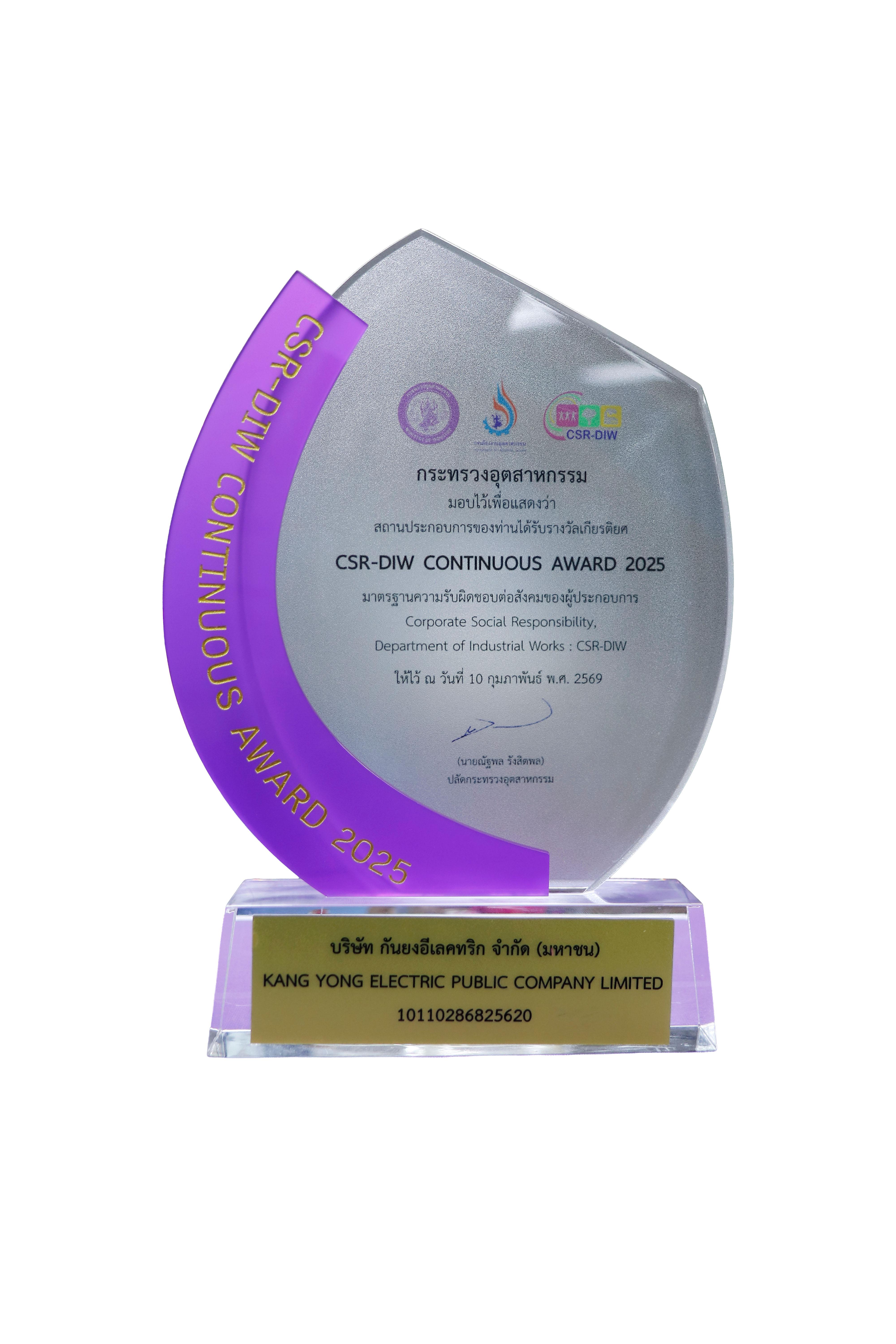
CSR-DIW Continuous Award for the 8th consecutive year
On March 25, 2026 the Company received the CSR-DIW Continuous Award 2025 for the 8th consecutive year, presented by the Department of Industrial Works, Ministry of Industry, under the program promoting socially responsible industrial operations and sustainable coexistence with communities. The award was presented by Ms. Anchalee Yingthaveesitkul, Director of the Eco-Industrial Development Division and Environmental Expert (Senior Scientist). Mr. Atakrit Siwasarit, General Manager, represented the Company in receiving this prestigious award at the Royal Jubilee Ballroom, Challenger Building, IMPACT Muang Thong Thani, Nonthaburi Province.
Law Violation Incidents
Law Violation Incidents
| Metric | Current Year | Previous Year | Two Years Ago |
|---|---|---|---|
| The total number of cases or incidents of significant violations of laws or regulations regarding social and human rights (Cases) | 0 | 0 | 0 |
| The total number of cases or incidents that cause significant labor disputes (Cases) | 0 | 0 | 0 |
| The total number of cases or complaints related to consumer rights violations (Cases) | 0 | 0 | 0 |
| The total number of cases or complaints related to partner rights violations (Cases) | 0 | 0 | 0 |
| The total number of cases or incidents that cause disputes with the community/society (Cases) | 0 | 0 | 0 |
| The total number of cases or incidents related to cyber security or customer data breaches (Cases) | 0 | 0 | 0 |
| The total number of cases or incidents related to safety and occupational health at work (Cases) | 0 | 0 | 0 |